
Last updated November 25, 2026
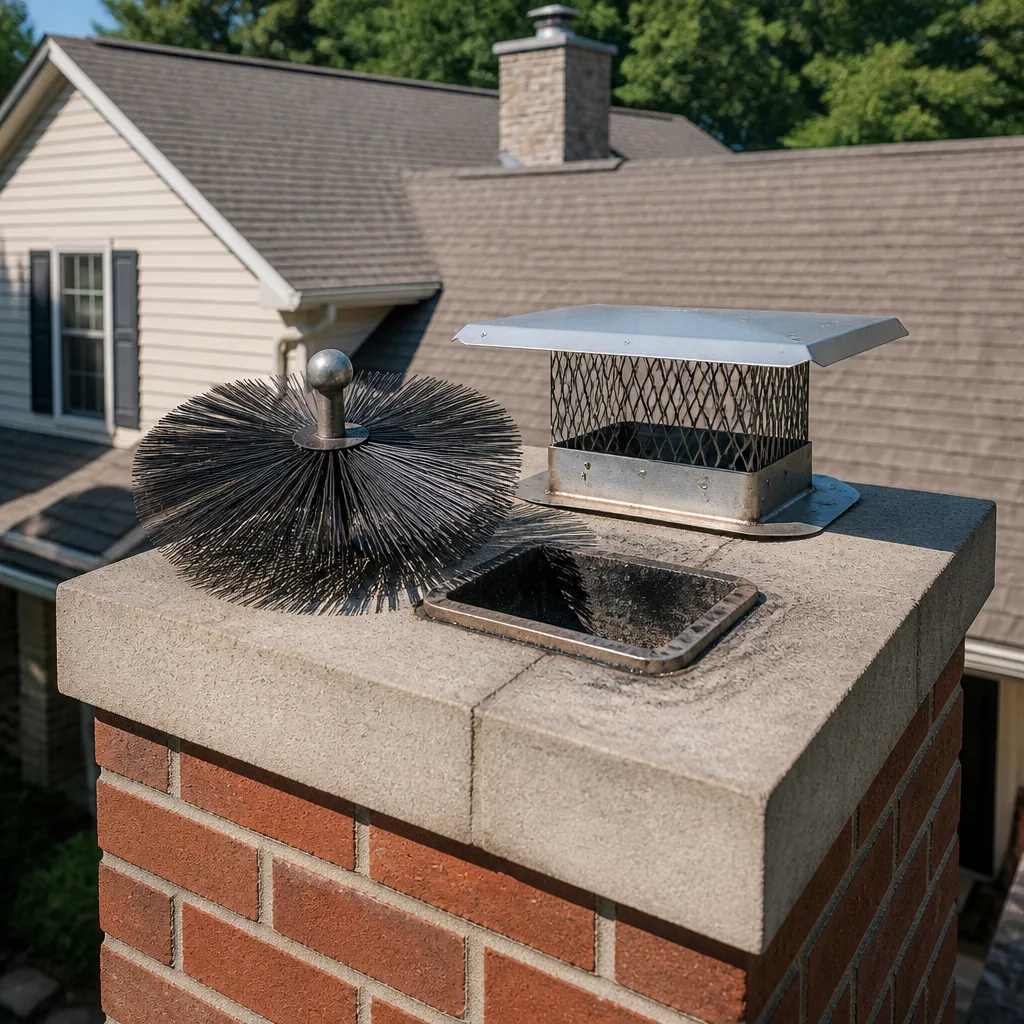 Sweep & inspection
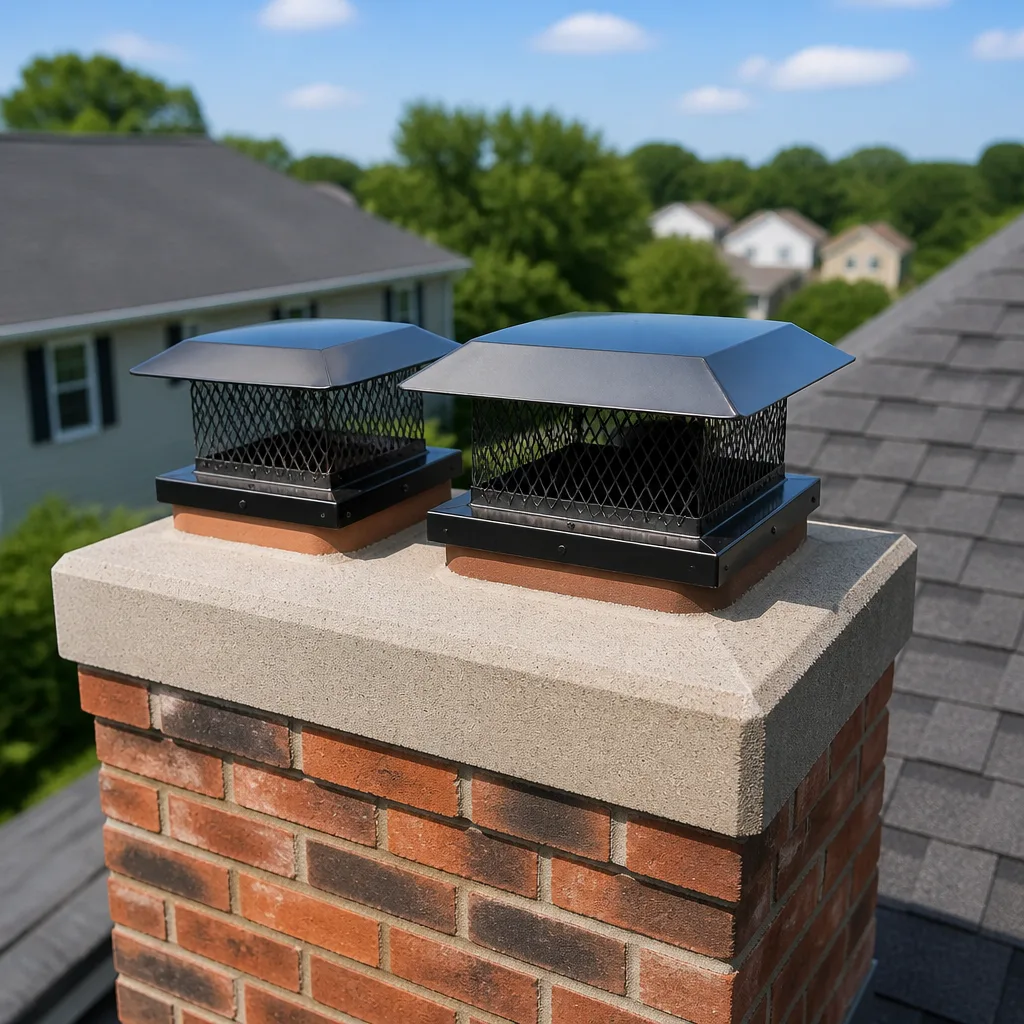 Caps & crowns
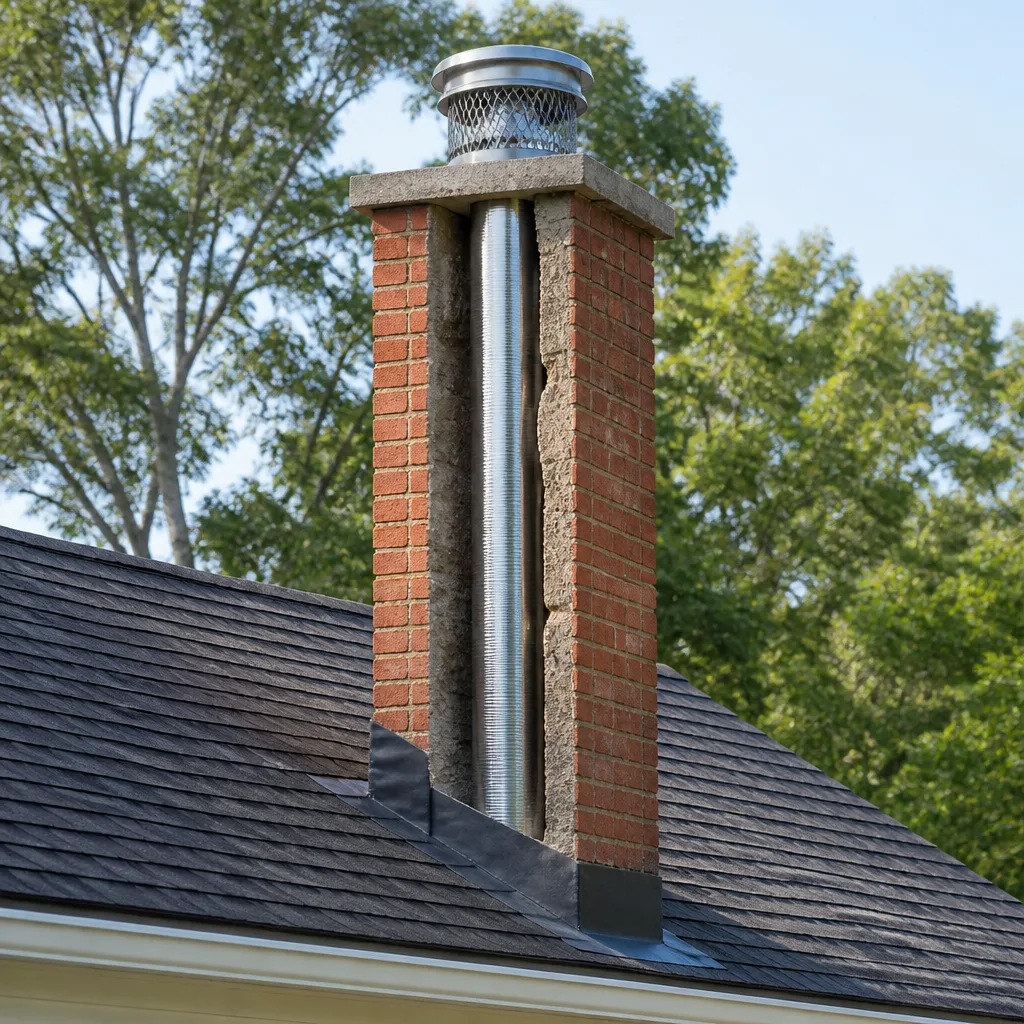 Flue relining
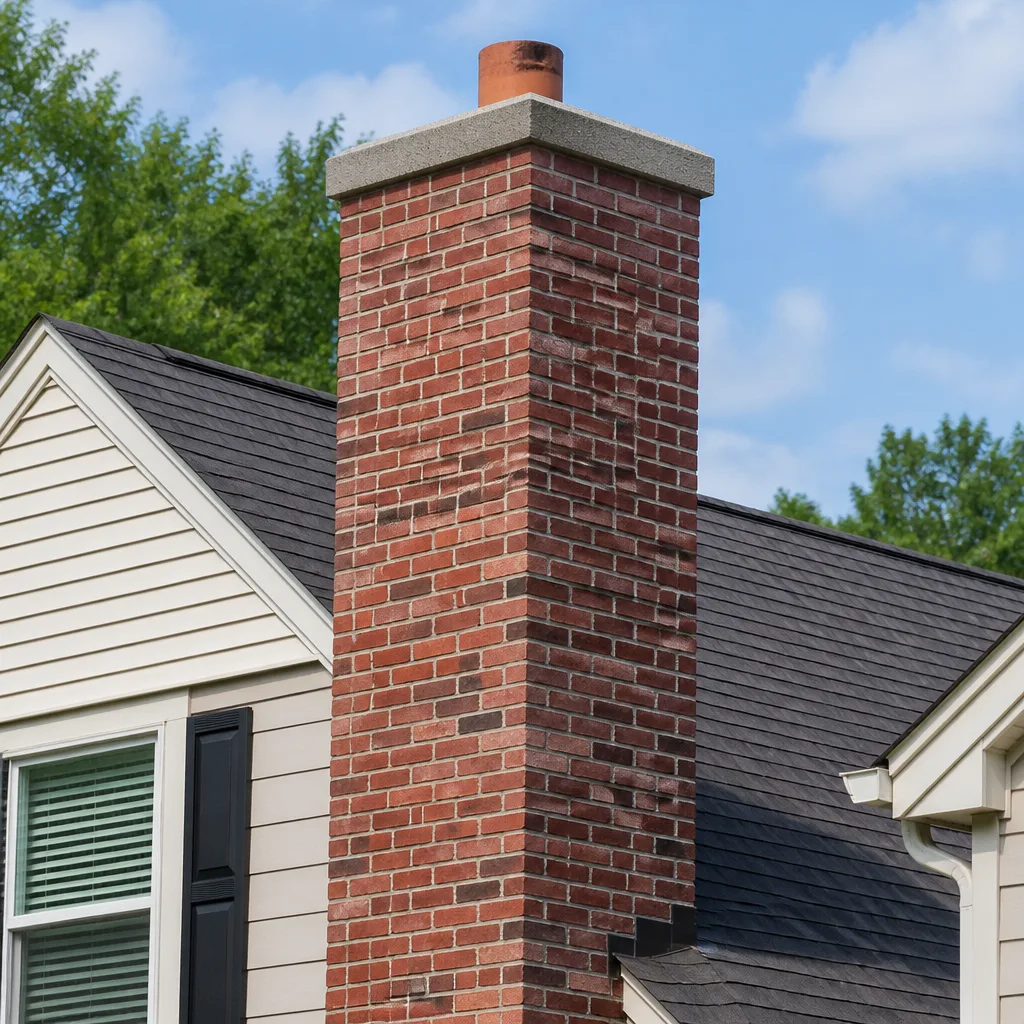 Masonry repair
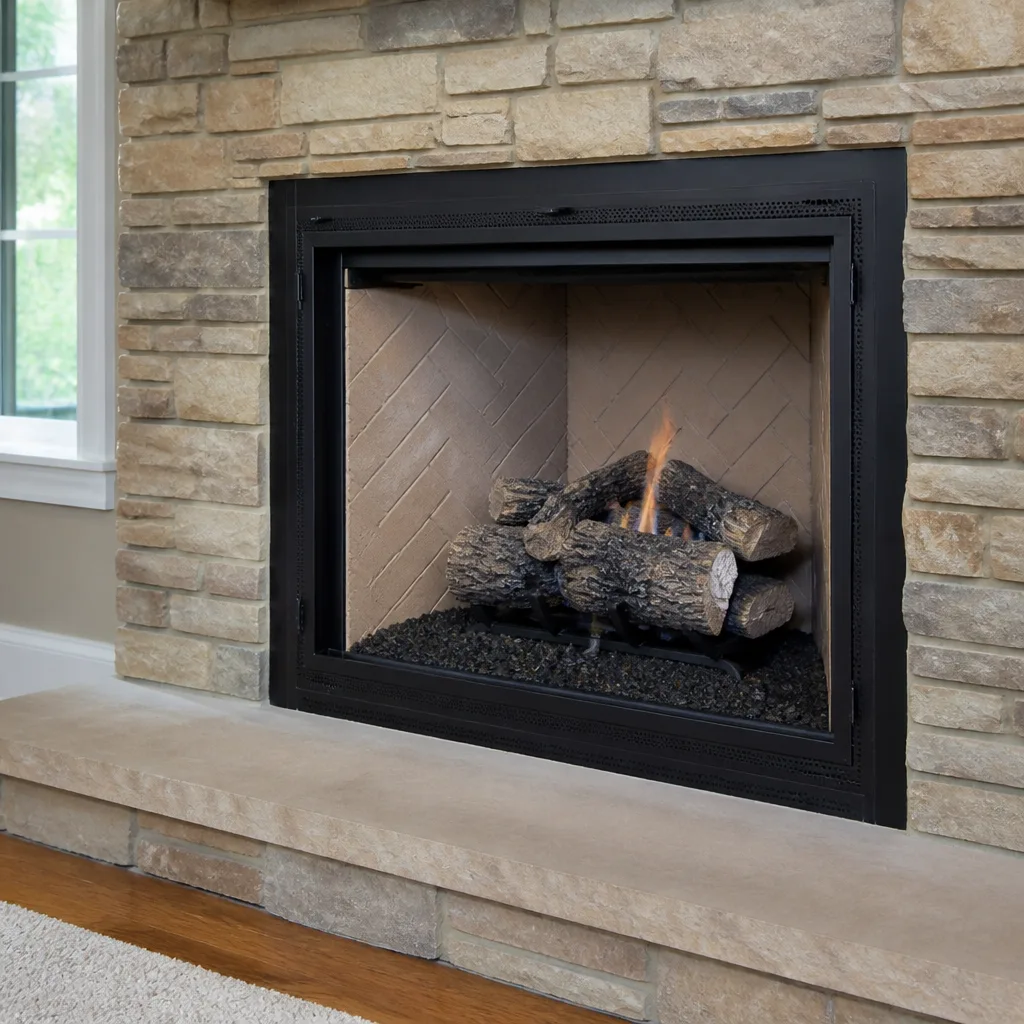 Gas fireplace service
Level 1 sweep and inspection to the NFPA 211 annual standard - flue, crown, cap, and flashing checked and photographed
Chimney sweep logs do not sweep chimneys. They loosen some creosote - which then falls where a brush and vacuum still have to collect it.
Chimney Cleaning Emergency Preparedness Guide for San Clemente Homes
Most homeowners think chimney emergencies begin with a fire in the firebox. In San Clemente, they usually begin with a wind advisory. When a Santa Ana event rolls through south Orange County, it does three things at once: it drives debris into every uncapped flue on the ridge, it knocks out power to neighborhoods that then reach for a fireplace they haven’t touched in two years, and it pushes regional wildfire smoke into the same houses. The chimney that fails isn’t the one that gets used every weekend. It’s the one nobody thought about until the lights went out. This guide walks through each of those real scenarios and what to do before, during, and after.
Quick Answer
Chimney emergency preparedness in San Clemente means three things: getting your cap, damper, and spark arrestor inspected and sealed before red-flag wind season, knowing the burn limits and smoke cues for a long-idle fireplace during a power outage, and having the correct protocol for managing your damper during a regional smoke event. It also means scheduling a Level 2 inspection after any nearby wildfire or significant Santa Ana event, even if you never lit a fire. The work you do before the emergency is what keeps the emergency small.
Styles & brands we work with
- Sweep & inspection
- Caps & crowns
- Flue relining
- Masonry repair
- Gas fireplace service
Table of Contents
- Pre-Santa Ana Season Checklist: Cap, Damper, Spark Arrestor
- Using a Long-Idle Fireplace During a Power Outage
- Wildfire Smoke and Your Damper: The Correct Protocol
- How to Identify a Chimney Fire in Progress
- The Post-Event Inspection Requirement
- Creosote, Sweeping, and the Real Emergency Condition
- Caps and Crowns: Closing the Loop on Protection
- Building a Year-Round Preparedness Log
Pre-Santa Ana Season Checklist: Cap, Damper, Spark Arrestor
The single most preventable chimney failure in San Clemente homes isn’t a cracked flue tile. It’s a missing or damaged cap, and the reason is the wind. Orange County’s red-flag wind conditions turn a roofline into a debris conveyor: palm fronds, eucalyptus leaves, dried brush, and fine grit get driven into any open flue mouth. What goes in doesn’t always come out. It sits at the smoke shelf or lodges in the flue, restricting draft and adding a dry, combustible layer to the flue interior.
Run this inspection before wind season starts:
- Cap integrity. Look at the cap from the ground with binoculars or have it inspected on the roof. The cap should fully cover the flue outlet, with intact mesh on all sides. A cap missing mesh, bent sideways, or rusted through where the sides meet the flue is a debris entry point.
- Spark arrestor. The spark arrestor is the mesh screen (often part of the cap assembly on a factory-built unit). It should be clean, structurally whole, and firmly attached. A detached screen on a top-mount cap is not doing its job.
- Damper seal. Open the damper by hand. It should close fully and sit flush against the frame, with no daylight visible around the edges. A gapped damper lets debris, moisture and – during smoke events – soot pull back into the living space.
- Flue interior visible at the top. If you can see heavy accumulation or a glossy black glazed surface at the top of the flue, that’s a call for a chimney sweep before the season starts, not after.
- Crown and top of the masonry. A cracked crown lets water enter the chimney body, which degrades the flue lining and creates a structural failure point independent of any fire risk.
If any of those checks fail, we’d rather see the photo before the red flag than clean up the consequence after. Smoke testing is not a substitute; visual inspection from the roof is.
Using a Long-Idle Fireplace During a Power Outage
During a San Clemente power outage, a fireplace that hasn’t been used in 18 months becomes an emergency heat source with a very cold flue. An uncleaned flue that sees sudden heavy use is exactly the condition under which chimney fires start. The creosote hasn’t burned off. The flue is cold and wet with condensation. The first few fires in a season are always the riskiest – and an outage is when they happen in the most stressed, least attentive circumstances.
The two-hour burn limit rule matters here. On a long-idle fireplace, run one fire for no more than two hours the first time you light it. Watch for the following, and shut it down if you see any:
- Smoke rolling out of the firebox into the room. This means the flue isn’t drafting. Stop, open a window, and don’t re-light until you know why.
- Heavy, dark smoke from the cap. You can’t always see it from indoors – step outside and look.
- Fireplace glass browns quickly or the box smokes at the top gasket. Often a sign of inadequate draft, not a failing appliance.
- Any smell of creosote or burnt wood that doesn’t clear within the first fifteen minutes. A cold flue will smell strongly at first. If it persists past the warm-up, something is wrong.
The most important thing you can do if you haven’t used the fireplace in over a year: get it swept and inspected before the next outage, not during it. If you find yourself reaching for the fireplace in the middle of an outage and the flue hasn’t been checked, run one short, small fire – don’t stoke it into a serious heat load.
Wildfire Smoke and Your Damper: The Correct Protocol
When regional wildfire smoke settles over San Clemente, the right move with your damper is to keep it fully closed – and the common mistake is to crack it open “just a little” to let the house breathe. A partially open damper acts as a siphon. The pressure differential between the hot exterior air and the cooler interior of your home pulls smoke down the flue and into the living room, not out. A closed damper with an intact, sealed cap is a much better barrier than a half-open one.
The correct protocol during a smoke event:
- Confirm the damper is fully closed. Reach in, feel the plate seat against the frame. If you can see daylight around it from inside the firebox, it isn’t sealing.
- Seal the firebox opening with a fire-rated cover or heavy, tight-fitting screen if you have one, taped at the edges. This is a temporary measure, not a permanent solution.
- Turn off any exhaust fans, dryer vents, or range hoods running in the house. These create negative pressure and will pull smoke through every gap they can find, including the chimney.
- Do not light a fire during a smoke event, even if the region isn’t under a fireplace ban. A fire during regional smoke pushes more fine particulate into the outdoor air your neighbors are breathing – and it’s the moment utility crews and first responders least need another ignition source.
- Keep the cap and crown sealed. This is where a proper cap pays back the investment year after year. A cap in good repair blocks the primary entry path for smoke, embers and debris.
If your damper doesn’t fully close or your cap is compromised, this is the season to schedule a chimney repair rather than work around it.
How to Identify a Chimney Fire in Progress
A chimney fire is often quiet. The dramatic, roaring version you see in movies is real but less common than the slow, rumbling, low-grade burn that happens inside a soiled flue. Here is what to watch for:
- A low rumbling or roaring sound from the chimney – different from the crackle of a fire in the firebox. It sounds like a distant train or engine.
- Dense smoke or sparks erupting from the top of the chimney.
- A hot chimney – if the exterior of the chimney or the adjacent wall feels unusually warm to the touch on either side of the flue, that’s a serious sign.
- Creosote smell that suddenly intensifies, or a smell of burning material you can’t account for from the firebox.
- A pinging or cracking sound from the flue interior – this can be the flue tiles fracturing from thermal stress.
The correct sequence when you suspect a chimney fire:
- Get everyone out of the house and call 911 first. Do not attempt to fight the fire before calling, even if you think you can manage it. Chimney fires spread into the surrounding framing faster than they look like they’re spreading, and the fire department needs to see the home before you’ve moved anything around.
- If safe to do so after calling, close the firebox door or glass doors, close the damper, and cut off the air supply. This starves the fire.
- Do not put water in the firebox or down the chimney on a masonry chimney under load. The thermal shock can shatter flue tile or split a metal liner and make the situation worse.
- From outside, if safe, spray water from a garden hose down the top of the flue – but only from a safe distance, and only after 911 has been called and you are not putting yourself in danger.
- Do not re-light the fireplace. Every fire after a suspected chimney fire requires a professional inspection before any further use, no exceptions. The flue is very likely damaged.
We’ve seen the aftermath of quiet chimney fires more often than dramatic ones. The quiet ones are the ones that go untreated for years, and they’re the ones where the flue tile is cracked all the way through and hidden behind soot.
The Post-Event Inspection Requirement
A chimney that survived a nearby wildfire or a significant Santa Ana event needs a Level 2 inspection even if no fire occurred inside the flue. The reason isn’t obvious: the destructive mechanism in a nearby wildfire isn’t direct flame contact. It’s heat, ember intrusion, and structural load.
The factors that make a post-event inspection worth doing in San Clemente:
- Ember intrusion through a cap that was compromised by wind-driven debris. Embers can wedge in the smoke chamber or behind a cap and smolder slowly.
- Thermal cycling from nearby fire, which stresses the crown, flue tile joints, and cap fasteners even without direct contact.
- Wind-driven debris loading the cap, chimney top, or flue above the smoke shelf.
- Damper and cap stress from fire suppressant overspray in the neighborhood, which can corrode fasteners, degrade the cap mesh, and pit the metal housing.
- Hidden flue damage – a Level 2 inspection includes a camera survey of the flue interior, and it’s the only way to see cracks in flue tiles, gaps in joints, or detached components that aren’t visible from the firebox or the roof.
A Level 2 inspection is not a cleaning. It’s a targeted assessment. If a chimney passed a Level 1 visual last year but sat through a real Santa Ana event this fall, it’s a good time to have a Level 2 done. Same goes for a home that’s relocated from elsewhere in the county, or a fireplace that’s never been inspected since purchase.
Creosote, Sweeping, and the Real Emergency Condition
The real emergency condition isn’t the fire you see; it’s the creosote layer you can’t. Creosote forms in stages, and each stage is progressively harder to remove and more dangerous to burn. A slow, smoldering fire – the kind you get when you’re cold and trying to stretch a fire through an outage – builds creosote faster than a hot, clean fire. This is the exact condition an outage creates.
The stages, in brief:
- Stage 1: soot and light flaky creosote. Removed by standard sweeping. Low fire risk if swept regularly.
- Stage 2: hard, shiny, crusty creosote. Requires more aggressive mechanical sweeping. Elevated fire risk – will ignite under sustained heat.
- Stage 3: glazed, hardened creosote. Difficult to remove with standard brushes. High fire risk. Often needs chemical treatment before sweeping.
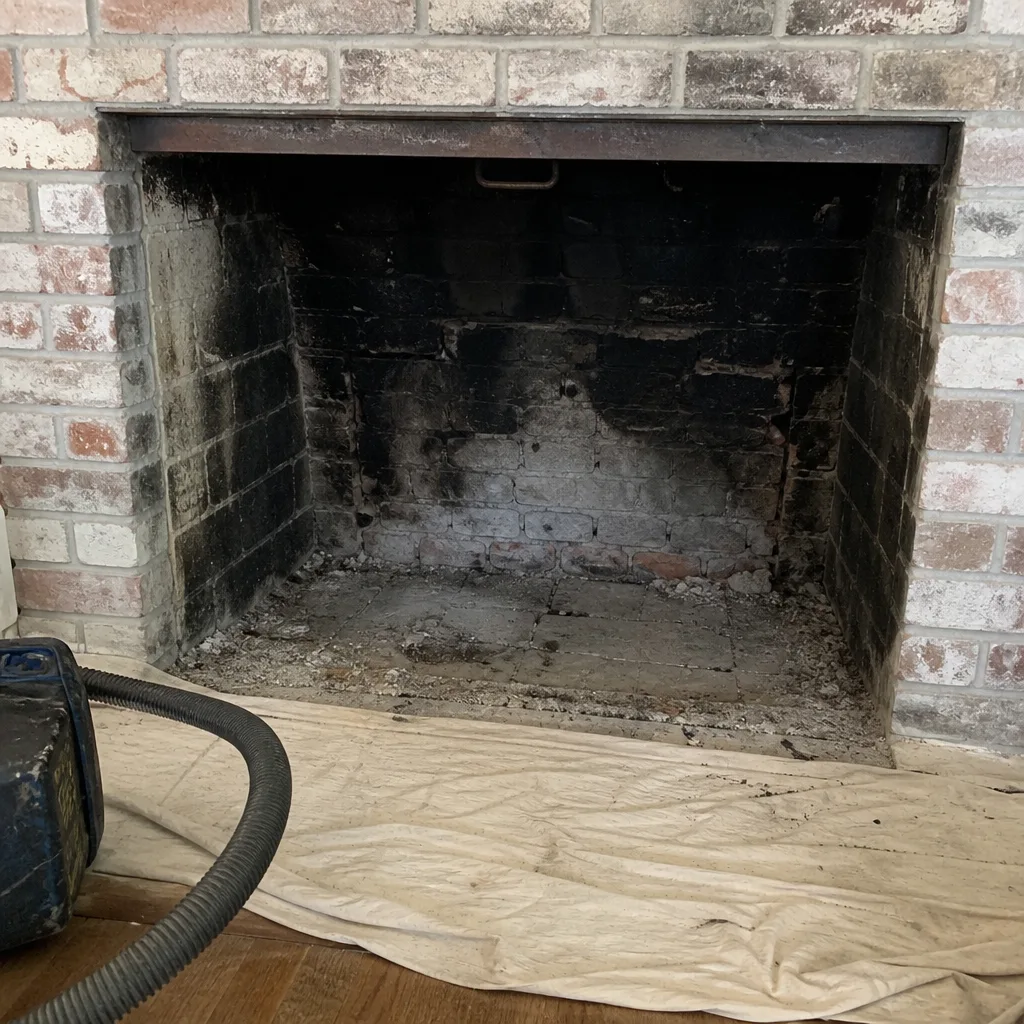
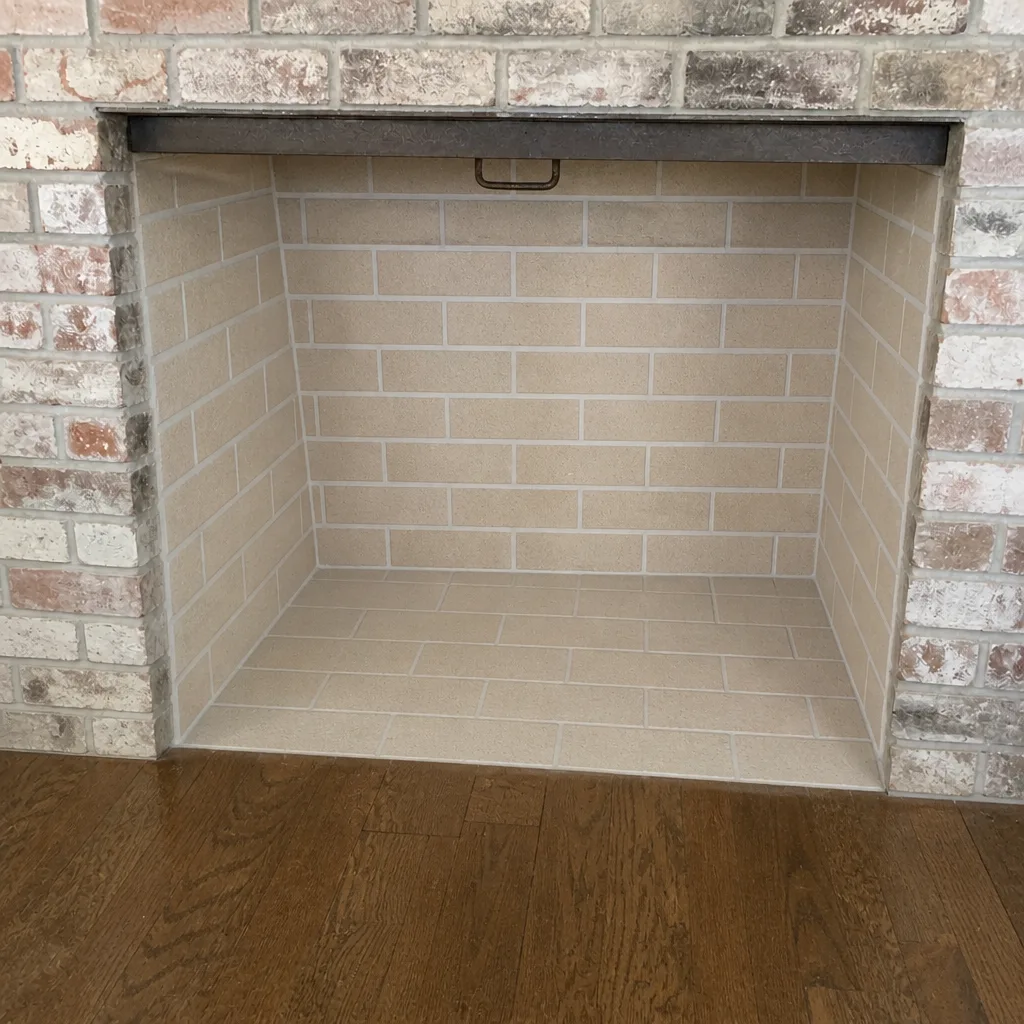
The rule of thumb for how often a San Clemente home needs a chimney sweep: every year the fireplace is actively used, and before the season starts if it hasn’t been swept in over 12 months. A fireplace used for holiday and cold-snap burns only (say, a dozen fires a season) can, in some cases, go longer between sweeps, but the creosote threshold that determines “safe to burn” is about accumulation, not fire count. We check the accumulation. Sometimes that means recommending another sweep next year; sometimes it means telling a homeowner they’re fine for a while. A written estimate with the photo report in hand tells you what was actually found.
We work with fireplace repair alongside sweeping for the same reason: the firebox, damper, and flue are one system. A sweep that leaves a broken damper behind hasn’t done you a favor.
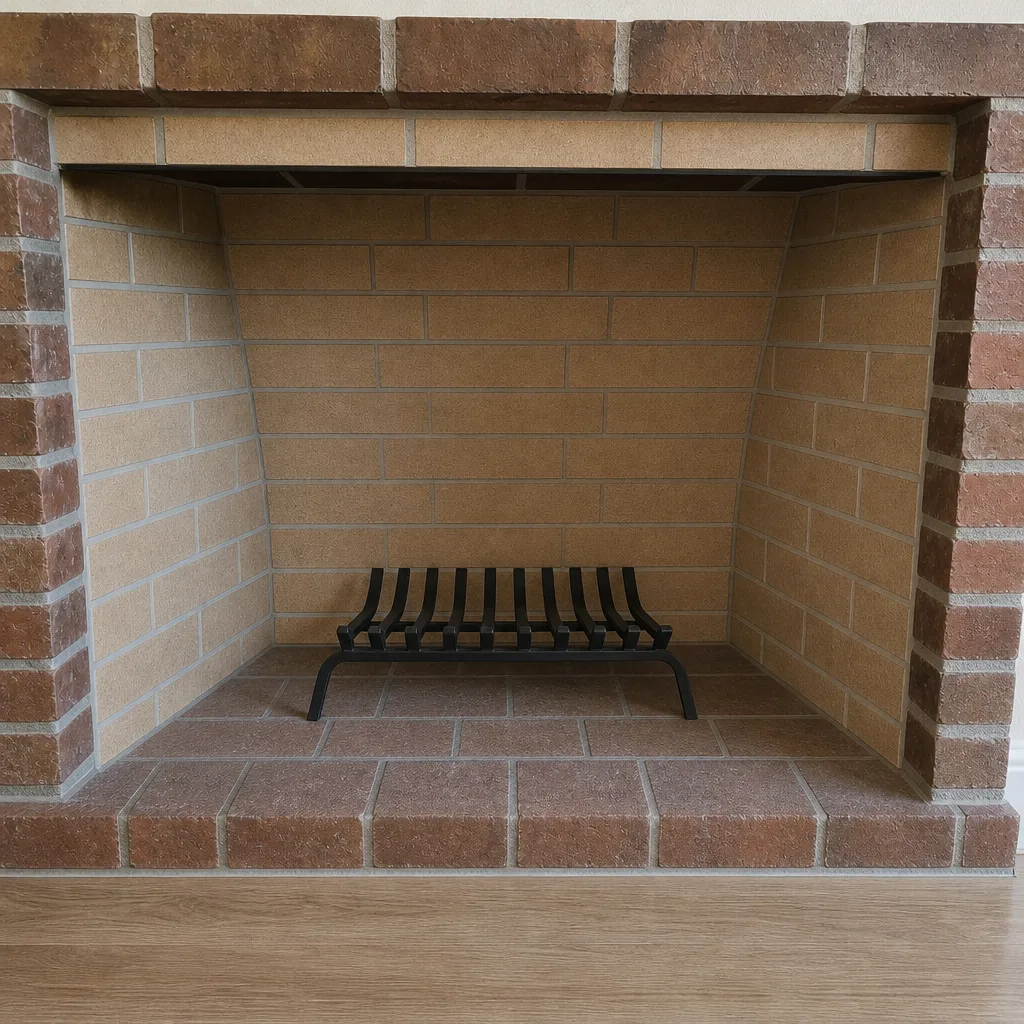
See the difference
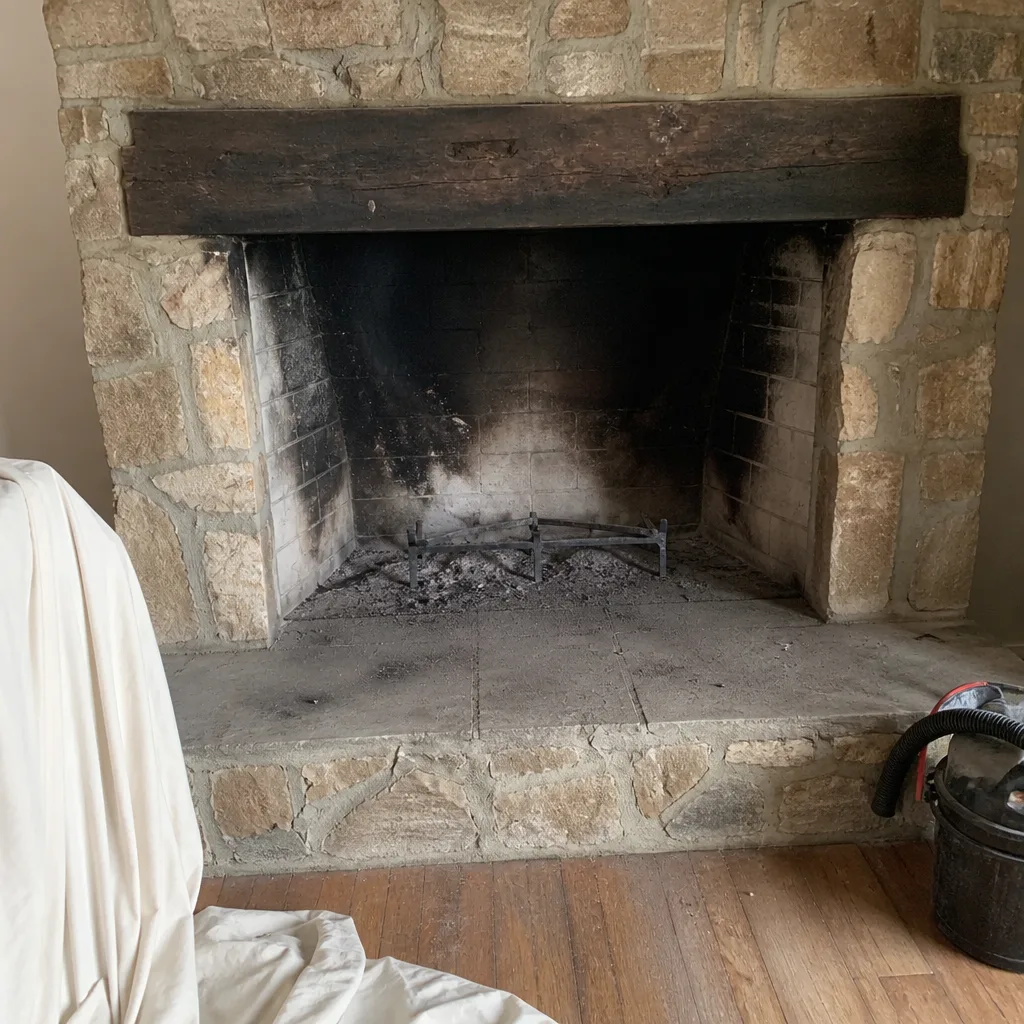 Before
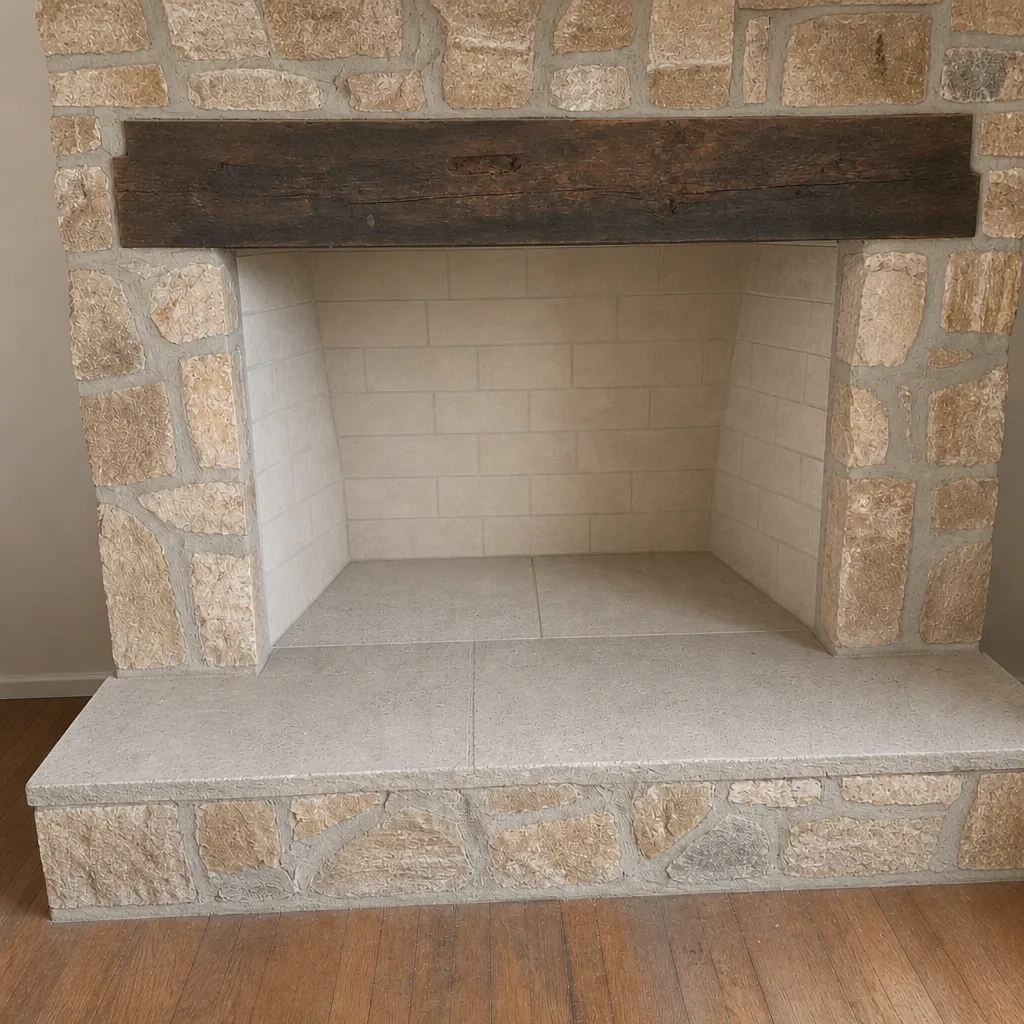 After
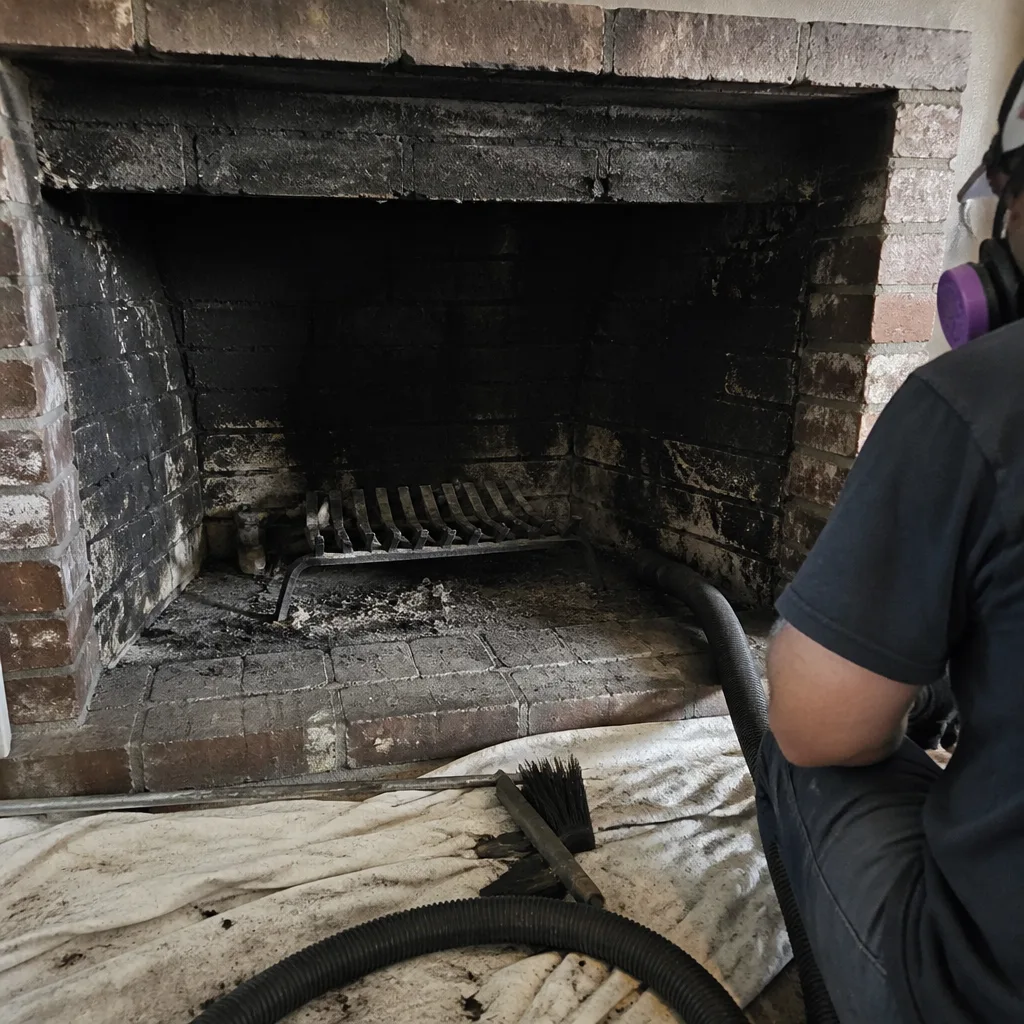 Before
 After
 Before
 After
Caps and Crowns: Closing the Loop on Protection
A chimney cap is a wind and debris barrier. A chimney crown is a weather barrier for the masonry itself. Both are components – not afterthoughts – and both belong in the same category as the cap and flue: preventative infrastructure. A chimney that’s been swept and inspected but has no cap or a failing crown is going to fail in the next event, even if it’s clean today.
What a proper cap and crown setup does in San Clemente:
- Blocks wind-driven debris during red-flag wind events – the primary debris path into an uncapped flue.
- Blocks ember intrusion from regional wildfire events.
- Keeps rain out, which extends flue tile life and prevents water staining the chimney body.
- Anchors the spark arrestor so the mesh screen stays in place year after year.
- Protects the top of the flue from thermal cycling that cracks crowns and loosens joints.
We install caps and crowns as part of the same service scope as repair and inspection – no coordination with a separate roofing or masonry contractor required. For flues that have deteriorated past what a cap can save, HeatShield flue resurfacing is an option that re-lines and restores the interior without demolition. We’ve found it’s often the more practical answer than tearing out the chimney on a home that’s otherwise structurally sound. We specify HeatShield, DuraFlex, Copperfield and Famco because those are what the trade itself uses for this work.
Building a Year-Round Preparedness Log
The best time to think about a chimney emergency is when there isn’t one. A simple maintenance log for your San Clemente home does more to prevent emergency scenarios than any single service call. Here’s what to track:
- Most recent sweep – date, who did it, whether creosote was logged as Stage 1, 2, or 3.
- Most recent inspection – Level 1 or Level 2, and the report or photos from that inspection.
- Cap and crown condition – noted at each inspection, with any repair dated.
- Damper seal check – done at the start of each burn season, noted with a photo if you can reach it.
- Post-wind-event or post-wildfire check – date, whether it was a full Level 2 or a visual only.
- Any appliance changes – replacing the firebox insert, converting to gas logs, or changing the fireplace surround. Each of these changes flue requirements.
Our technicians have up to 15 years of experience across the full scope – sweep, inspection, fireplace repair, chimney repair, and cap and crown – under one company, so the log stays with the same specialist instead of being handed between a roofer, a mason, and a general handyman.
Common Mistakes to Avoid
- Cracking the damper “just a little” during a smoke event. A partially open damper pulls smoke into the house instead of venting it out. Close it fully and seal the firebox opening temporarily.
- Lighting a long-idle fireplace without a sweep first. The first fire of the season in a cold, soiled flue is the one most likely to ignite creosote. Get it swept before the outage, not during.
- Calling the fire department after trying to extinguish the fire yourself. The correct sequence is 911 first, then contain if safe. Moving things around before the fire department sees the scene makes their assessment harder.
- Skipping the post-event inspection after a nearby wildfire. A chimney that “looks fine” from the ground can have a cracked flue tile or detached cap component from wind-driven debris. Level 2 inspection is the only way to know.
- Treating the cap as optional. An uncapped flue in San Clemente’s Santa Ana wind corridor is a debris chute. Debris in the flue is not just an inconvenience – it’s a draft restriction and a fueling layer for the next burn.
- Trusting a partial sweep to fix a draft problem. If the fireplace smokes, the answer isn’t a longer brush. It’s a Level 2 inspection with a camera to actually see the flue.
- Assuming the fireplace will draft the same way it did last year. Flue condition changes season to season. The check-in at the start of each burn season takes minutes and pays for itself in avoided emergencies.
When to Call a Professional
Call a specialist before lighting the fireplace for the first time this season if the flue hasn’t been swept in over a year, if you’ve never had a Level 2 inspection, if the cap or crown is missing or damaged, or if you smell creosote after a short burn. Call after any Santa Ana wind event that visibly loaded your roofline with debris, and after any nearby wildfire regardless of what actually burned. Call immediately if you’ve had a suspected chimney fire, even a quiet one – no further burning until the flue is inspected.
As a chimney-only specialist, we handle sweep, inspection, repair, and cap and crown work in-house, so you’re not coordinating multiple contractors after an event. San Clemente Chimney Sweep offers free estimates in San Clemente – call (833) 509-5558. We answer 24/7. Fast dispatch from 7am to 7pm, Sunday through Friday. Get a quote the price is based on before work starts, and get the camera report in hand so you can see what we see.
Frequently Asked Questions
At least once a year if the fireplace is used regularly, and before the burn season starts if it’s been over 12 months since the last sweep. A fireplace used heavily for emergency heat during a power outage should be swept afterward, not just before – the heavy use that follows a long idle period is the highest-risk time. Call (833) 509-5558 for an exact quote – estimates are free.
Yes, in our experience. The failure modes after a nearby wildfire are ember intrusion, thermal stress on the crown and flue tile joints, and wind-driven debris loading behind the cap. None of those are visible from the ground. A Level 2 inspection includes a camera survey of the flue interior and is the only way to confirm the chimney is actually clear. Call (833) 509-5558 to schedule one.
The price is set per job by a written estimate, and the estimate itself is free. A standard sweep on a straightforward flue and a sweep plus a Level 2 inspection on a longer-idle or post-event chimney are different jobs with different scopes – the estimate reflects what’s actually found. Call (833) 509-5558 for an exact quote before you book.
The most likely outcome is a fire that smokes heavily into the room because the cold flue isn’t drafting – annoying, but stoppable. The less likely, more dangerous outcome is a chimney fire started in a creosote layer that hasn’t been swept. Nothing about the emergency scenario changes the fact that a clean, inspected flue is the safety mechanism. Call (833) 509-5558 to get the sweep done before the next outage.
Fully closed, yes. A half-open damper draws smoke down the flue into the house. Close it fully, feel for a flush seal against the frame, seal the firebox opening temporarily, and turn off exhaust fans and dryer vents that create negative pressure. Call (833) 509-5558 if the damper won’t seal.
A quiet chimney fire usually announces itself by a low rumbling, a smell of burning creosote that doesn’t match the firebox, or a pinging sound from the flue. If you suspect one, get everyone out and call 911 first, then call us at (833) 509-5558 for the inspection that follows. Do not re-light the fireplace before it’s inspected.
The Bottom Line
Emergency chimney preparedness in San Clemente is about three windows: the pre-Santa Ana window (cap, damper, spark arrestor, crown), the outage window (long-idle fireplace rules, two-hour first burn, smoke cues), and the post-event window (Level 2 inspection after any nearby wildfire or significant wind event). Sweeping closes the loop between them, because a dirty flue is the condition every one of those scenarios is really about. Get the camera report, get the written estimate before booking, and know exactly what’s happening inside the flue instead of finding out at the worst moment. Our team works with DuraFlex, HeatShield, Copperfield and Famco because that’s what serious chimney work actually requires.
For the full scope from sweep to repair to cap, see San Clemente Chimney Sweep and the full range we handle.
Call (833) 509-5558 for a free estimate. We answer 24/7. Fast dispatch from 7am to 7pm, Sunday through Friday. Nothing is recommended without photos or camera evidence you can review, and the written estimate sets the final price.
Written by the team at San Clemente Chimney Sweep.